
Copper has become the lifeblood of electrification—from electric vehicles to renewable energy grids and AI-driven data centers. With demand surging and supply constrained, copper producers are in the spotlight.
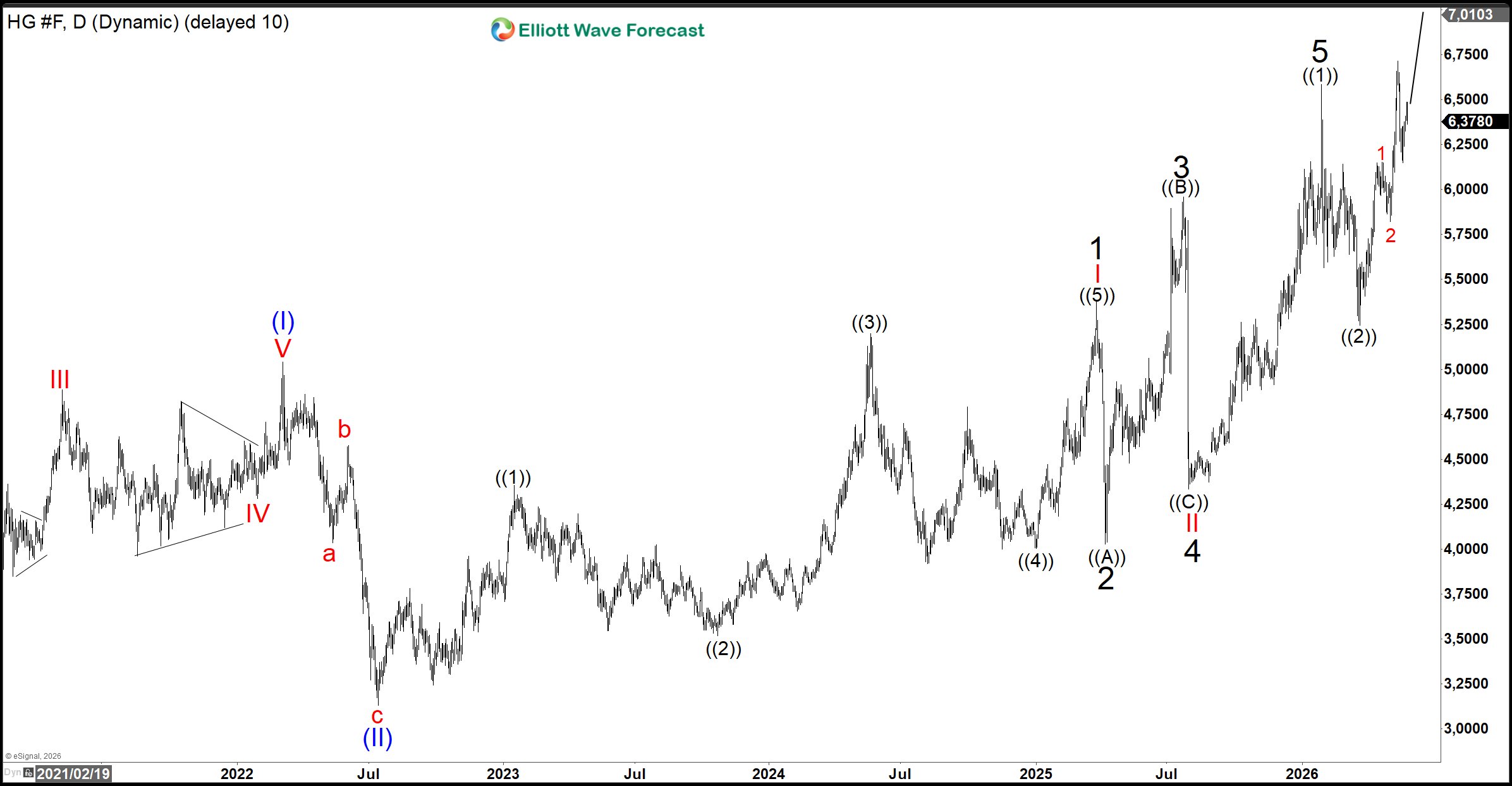
If you’ve been following commodities lately, you’ll know copper has surged to an all‑time high, signalling what we call a confirmed bullish sequence and reinforcing expectations for prices to continue rising.
See chart below.
What are Copper Stocks?
Copper stocks represent shares of companies engaged in copper mining, refining, exploration, and production. These firms generate revenue by extracting and selling copper, often alongside other valuable metals such as gold, silver, molybdenum, and nickel.
Copper is both a critical industrial metal and a strategic commodity, making copper stocks sensitive to copper prices, global supply chains, and economic cycles. Because copper is essential for electrification, renewable energy, and digital infrastructure, these stocks are increasingly seen as growth assets in 2026.
Major copper mining companies operate across Chile, Peru, the United States, Canada, Zambia, and the Democratic Republic of Congo. Chile remains the world’s largest copper producer, while Peru and Zambia are also key suppliers.
Why Copper Stocks matter in 2026?
Copper stocks matter in 2026 because they provide investors with exposure to one of the most critical commodities driving the energy transition and digital economy. Copper is indispensable for electrification, renewable energy, and AI infrastructure, making these equities both a cyclical play on global growth and a long‑term bet on structural demand. Electric vehicles require nearly four times more copper than traditional cars, wind turbines consume about three tons per megawatt, and AI data centers rely heavily on copper for wiring and cooling systems. On the supply side, new mines take years to develop, keeping availability tight and prices elevated. Together, these forces create a powerful bullish backdrop for copper and the companies producing it.
Below is a deep dive into the 10 leading copper stocks in 2026.
- Freeport-McMoRan (FCX) – USA
Freeport-McMoRan remains the largest publicly traded copper producer. Its Grasberg mine in Indonesia and North American operations give it unmatched scale. In 2026, Freeport benefits from strong copper prices and diversification into gold and molybdenum. Investors view FCX as a direct play on copper demand with global reach.
- BHP Group (BHP) – Australia
BHP owns Escondida in Chile, the world’s largest copper mine. With a diversified portfolio spanning iron ore, coal, and nickel, BHP offers stability alongside copper exposure. Its strong balance sheet and consistent dividends make it a favorite among institutional investors seeking long-term exposure to electrification metals.
- Rio Tinto (RIO) – UK/Australia
Rio Tinto’s copper assets, including Oyu Tolgoi in Mongolia, position it as a global leader. The company has invested heavily in automation and sustainability, appealing to ESG-focused investors. In 2026, Rio’s copper growth pipeline supports its role as a balanced, diversified miner with copper upside.
- Southern Copper (SCCO) – USA/Peru
Southern Copper is a pure copper play with massive reserves in Peru and Mexico. Its high dividend yield attracts income-focused investors. With copper prices elevated, SCCO’s profitability shines, making it one of the most direct ways to gain copper exposure in 2026.
- Teck Resources (TECK) – Canada
Teck Resources is expanding copper production through projects in Chile. Known for its diversified portfolio (coal, zinc, and oil sands), Teck is pivoting toward copper as part of its clean energy metals strategy. In 2026, Teck’s copper growth story is a key driver of investor interest.
- Antofagasta (ANTO) – Chile
Antofagasta is a Chilean copper specialist with strong reserves and steady production growth. Its focus on operational efficiency and cost control makes it resilient in volatile markets. Antofagasta is a regional powerhouse with global relevance.
- Glencore (GLEN) – Switzerland
Glencore combines mining with a powerful trading arm. Its copper operations in Africa and South America are complemented by its ability to trade and hedge commodities globally. In 2026, Glencore’s diversified model provides both copper exposure and risk management advantages.
- Hudbay Minerals (HBM) – Canada
Hudbay is a mid-tier copper producer with operations in Manitoba and Peru. Its growth potential lies in expanding production capacity and developing new projects. Hudbay appeals to investors seeking smaller-cap copper exposure with upside potential.
- Ero Copper (ERO) – Canada/Brazil
Ero Copper is a pure copper growth story with operations in Brazil. Its focus on exploration and expansion makes it one of the fastest-growing copper producers. In 2026, Ero Copper is seen as a high-risk, high-reward play on copper demand.
- First Quantum Minerals (FM) – Canada/Zambia
First Quantum operates major mines in Zambia and Panama, including Kansanshi and Cobre Panama. Its emerging market exposure provides scale but also geopolitical risk. In 2026, First Quantum remains a key global copper supplier with strong production volumes
Benefits of investing in Copper Stocks
- Direct Leverage to Copper Prices
Copper miners’ revenues rise when copper prices climb. With copper trading near all‑time highs, equities in this sector offer strong upside potential.
- Structural Demand Growth
Copper is indispensable for electric vehicles, renewable energy, and AI data centers. EVs use 4x more copper than traditional cars, wind turbines consume ~3 tons per MW, and AI infrastructure requires massive wiring and cooling systems. This ensures long‑term demand.
- Supply Constraints Support Prices
New copper mines take 7–10 years to develop, while existing producers face declining ore grades and geopolitical risks. This tight supply keeps prices elevated, benefiting miners.
- Portfolio Diversification
Unlike gold or silver, copper is a consumed industrial metal, tied directly to global growth. Copper stocks diversify portfolios by adding exposure to infrastructure and electrification trends.
- Dividend & Growth Potential
Large miners like BHP, Rio Tinto, and Southern Copper often pay dividends, while smaller pure copper plays (like Ero Copper) offer high growth potential. Investors can choose between stability and aggressive upside.
Risk of Investing in Copper Stocks
- Price Volatility
- Copper prices are highly sensitive to global demand, currency fluctuations, and speculative trading.
- Sharp swings can erode profits for miners and cause stock prices to underperform.
- Economic Slowdowns
- Copper demand is closely linked to construction, manufacturing, and infrastructure spending.
- A slowdown in China or global recession could weaken demand, pushing prices lower.
- Geopolitical & Regulatory Risks
- Major copper producers like Chile, Peru, Zambia, and the DRC face political instability, labor strikes, and regulatory changes.
- Environmental policies and stricter mining regulations can delay projects or increase costs.
- Supply Chain & Operational Challenges
- Declining ore grades mean miners must process more material to extract the same amount of copper, raising costs.
- New mines take 7–10 years to develop, creating long lead times and uncertainty.
- Disruptions (e.g., Indonesia’s Grasberg mine mudslide in 2025) highlight vulnerability to unexpected events.
- Market Rotation & Investor Sentiment
- Institutional investors are shifting capital into copper as a growth asset, but sentiment can reverse quickly if macro conditions change.
- A weaker Chinese economy or reduced infrastructure spending could trigger capital outflows.
Things to Consider Before Choosing Platinum Stocks
Copper price trends and volatility
Mining revenues are directly tied to spot prices, which can swing sharply with global demand shifts.
Global economic outlook
Copper demand rises with construction, manufacturing, and electrification but slows during recessions.
Supply dynamics and geopolitical risks
Many copper mines are located in regions like Chile, Peru, Zambia, and the DRC, where political instability, strikes, or regulatory changes can disrupt output.
Company fundamentals
Review balance sheets, dividend policies, production costs, and whether the company is a diversified miner or a pure copper play.
Long‑term demand drivers
EV adoption, renewable energy expansion, and AI infrastructure support structural growth in copper consumption.
Portfolio fit and risk tolerance
Copper stocks can offer strong upside but also carry cyclical risk, so diversification and position sizing are essential.
Final thoughts
Copper stocks offer strong upside in 2026, but investors must weigh risks carefully. Volatility, geopolitical instability, and economic cycles can sharply impact returns. The best approach is to diversify across large, stable miners (BHP, Rio Tinto) and pure copper plays (Southern Copper, Freeport‑McMoRan) while monitoring global growth trends and regulatory developments.
At Elliottwave Forecast (EWF), we deliver consistent market updates through regular charts update. Our analysts update 1‑hour charts four times daily and 4‑hour charts once per day across all 78 instruments. In addition, we host five live sessions each day and maintain a 24‑hour chatroom, providing clients with real‑time market guidance and answers to any questions they may have.
You can start a 14‑day trial with us today here and cancel anytime by emailing support@elliottwave-forecast.com