Introduction Financial markets often appear chaotic, with price swings that seem unpredictable. Many traders rely on indicators, news headlines, or gut instinct to make decisions. Yet beneath the surface, Elliott Wave Theory reveals that markets move in recognizable patterns driven by collective psychology. This structured approach offers clarity where randomness seems to dominate.
The Problem with Randomness
- Indicator overload: Traders often stack multiple tools—RSI, MACD, moving averages—without a unifying framework.
- Reactive trading: Decisions are made after moves happen, chasing momentum instead of anticipating it.
- Noise vs. signal: Random price action can mislead traders into overtrading or misjudging risk.
Without structure, trading becomes guesswork—akin to navigating a storm without a compass. Example look at the below chart with a lot of indicators
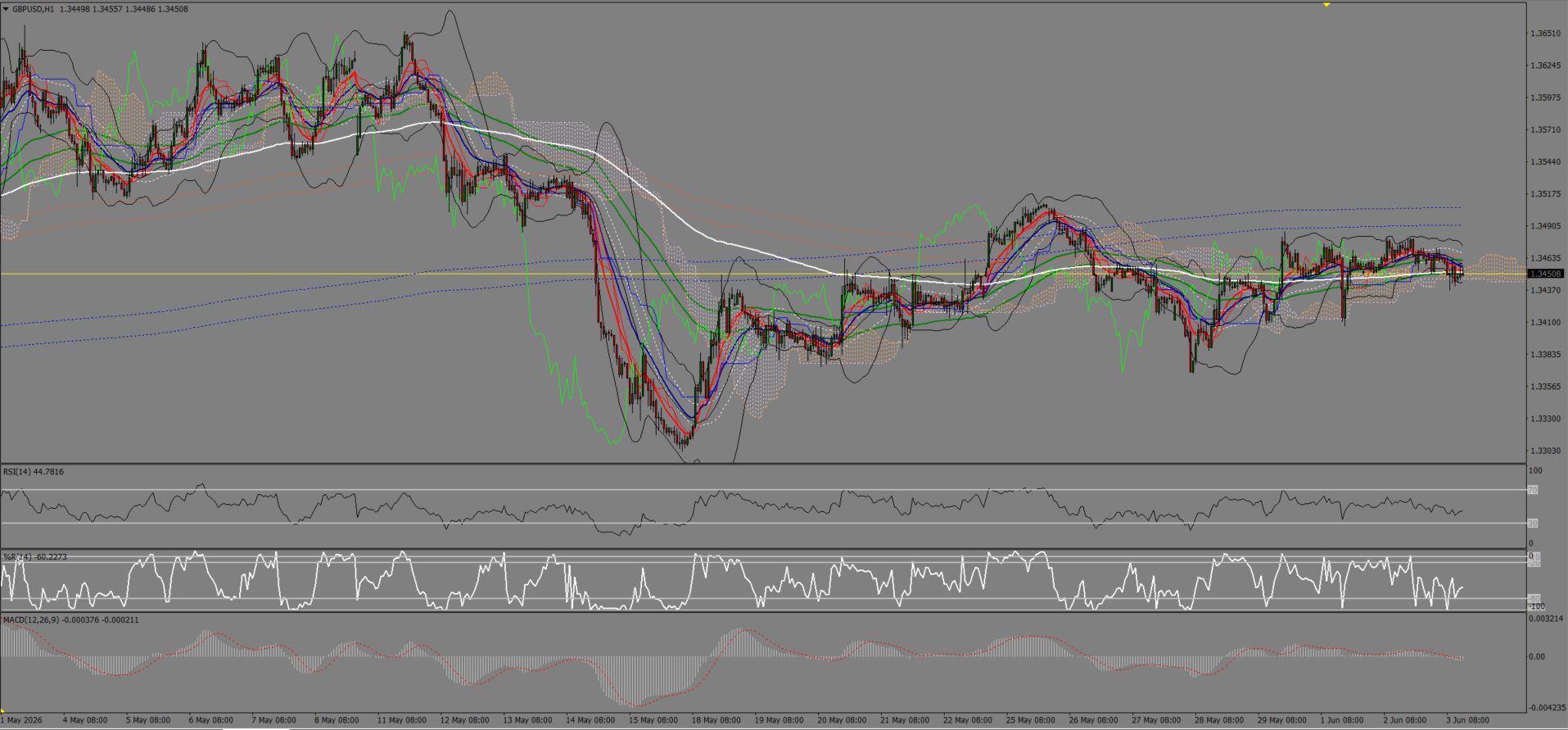
This makes reading the market as a whole challenging, and even more difficult when deciding the right moment for execution. Chart above is carrying excessive noise, leading to mixed signals that can cause traders to execute either too early or too late.
The Power of Structure in Elliott Wave
- Defined patterns: Impulse waves (trend) and corrective waves (retracement) provide a roadmap.
- Risk management: Invalidation levels act as guardrails, reducing emotional decision-making.
- Forecasting ability: By identifying where a market is within its wave cycle, traders can anticipate likely scenarios instead of reacting blindly.
- Psychological discipline: Structure enforces patience—waiting for setups to complete rather than forcing trades.
Structure transforms uncertainty into probability, giving traders a strategic edge. Take for example the chart below of IWM.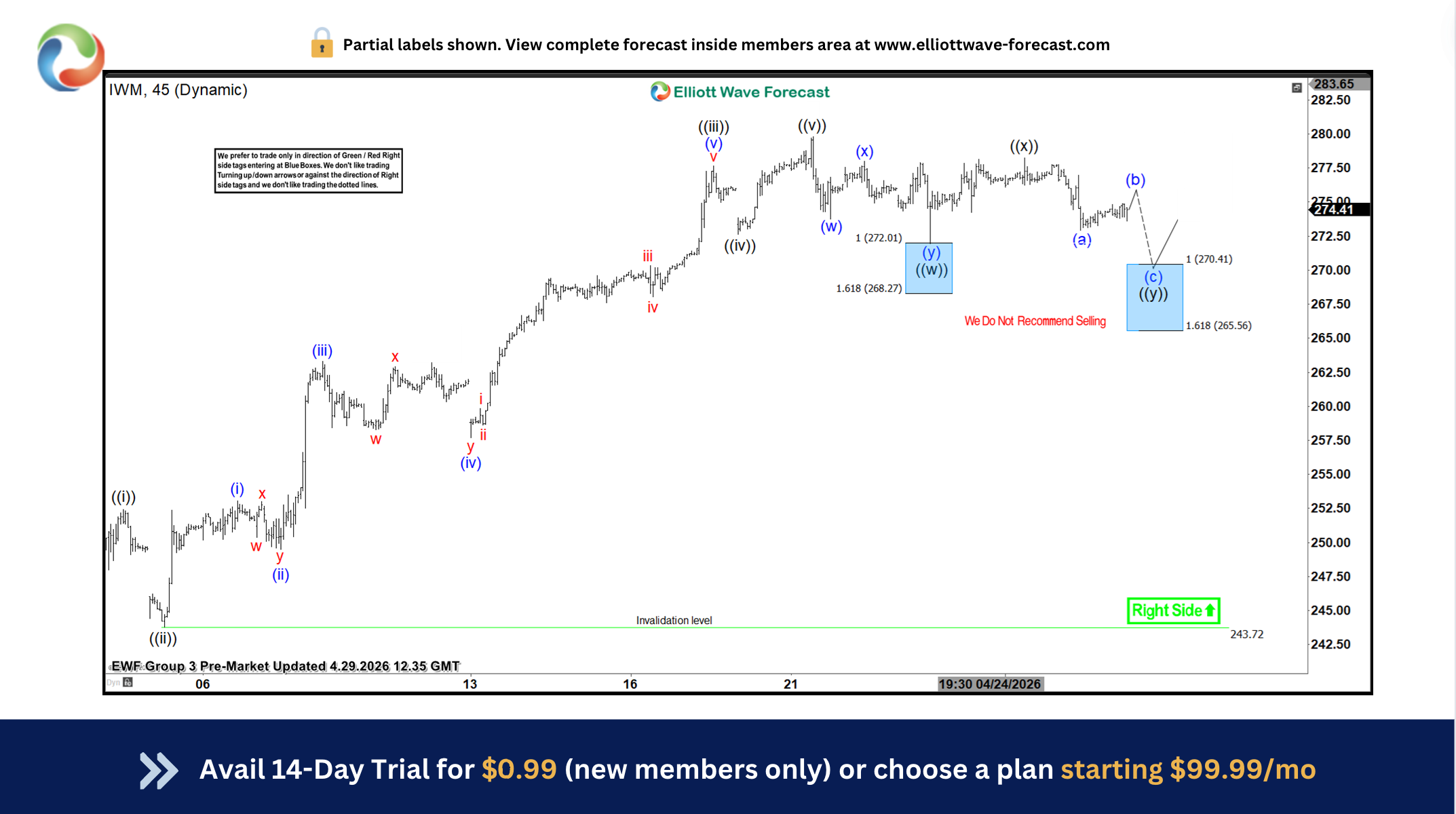
The chart presents a clean, well‑defined structure with clear expectations and an invalidation level that establishes risk. The pattern is precise, and rather than chasing price, we simply wait for it to reach a predetermined Blue box area—where execution becomes clear and decisive.
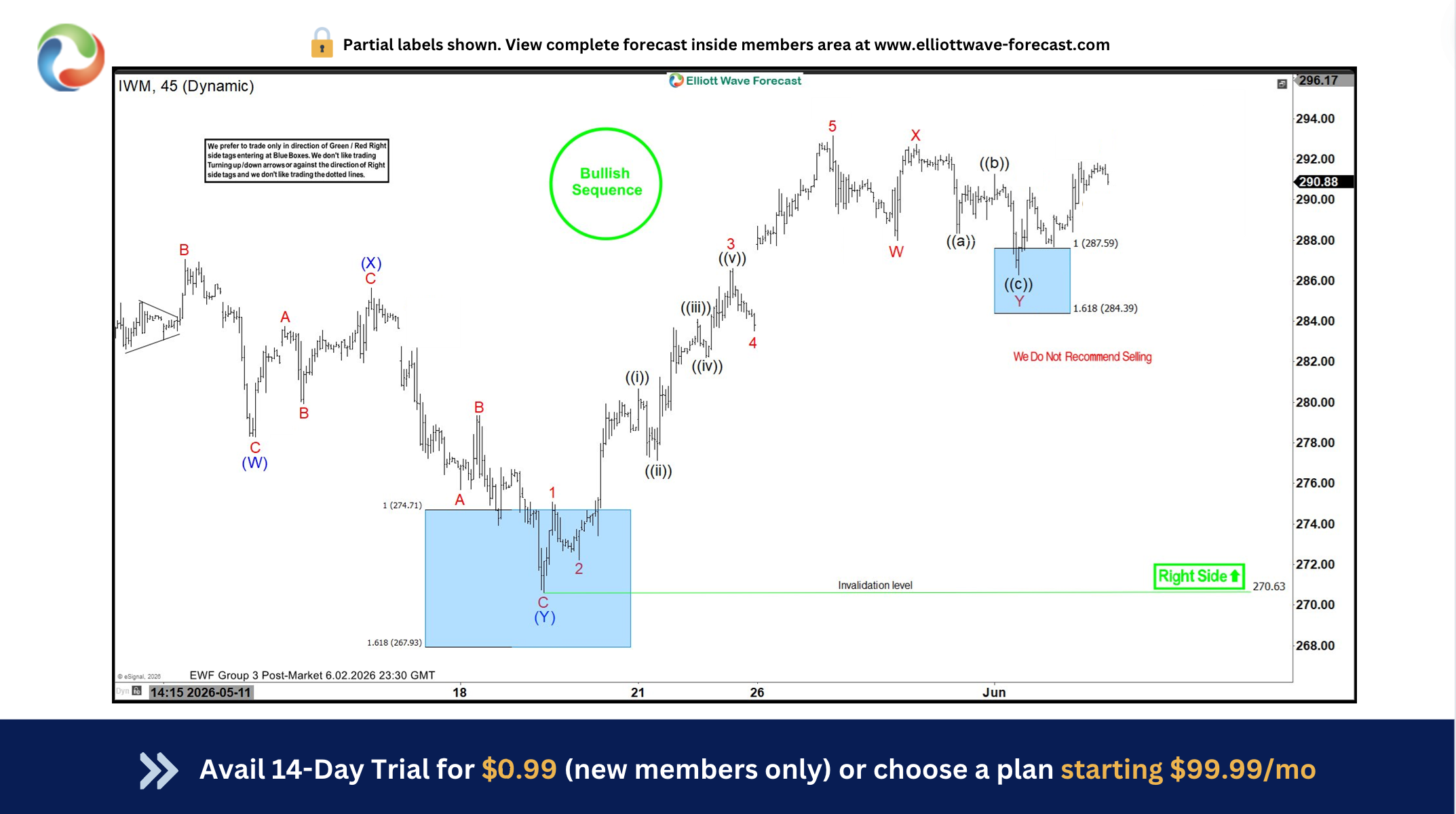
Fast‑forward the outcome of a planned trade by focusing on structure and clear levels at the Blue box area, without the distraction of multiple indicators cluttering the chart.
Comparing Methods
Each trading approach carries distinct advantages and limitations. Indicators such as RSI and MACD provide quick, easy‑to‑use signals, but they often lag price action and can generate false entries. News and events offer valuable contextual awareness, yet markets frequently price in information ahead of time, making outcomes unpredictable. Decisions based on randomness or instinct allow for speed, but they lack consistency and carry high risk. In contrast, Elliott Wave analysis stands out for its structured, anticipatory framework that defines risk and helps traders prepare for future moves. However, it demands practice, discipline, and patience to apply effectively, making it less straightforward than other methods but potentially more rewarding for those who master it.
Why Structure Wins
Markets are not random—they reflect human behavior, which follows cycles of optimism and pessimism. Elliott Wave Theory captures this rhythm, turning chaos into a structured narrative. While no method is perfect, structure consistently outperforms randomness because it provides:
- A framework for analysis
- A discipline for execution
- A strategy for risk control
Conclusion Trading without structure is gambling. Elliott Wave Theory offers a disciplined, pattern-based approach that helps traders anticipate moves, manage risk, and stay patient. In the long run, structure beats randomness—because markets may be noisy, but they are never truly chaotic.
At Elliottwave Forecast (EWF), we deliver consistent market updates through regular charts update. Our analysts update 1‑hour charts four times daily and 4‑hour charts once per day across all 78 instruments. In addition, we host five live sessions each day and maintain a 24‑hour chatroom, providing clients with real‑time market guidance and answers to any questions they may have.
You can start a 14‑day trial with us today here and cancel anytime by emailing support@elliottwave-forecast.com