 Elliott Wave theory is one of the most powerful tools in technical analysis, helping traders understand market psychology and price movements. Two essential techniques within elliott wave theory are channeling and trendlines, which provide a visual framework for identifying wave patterns and predicting future price action.
In this guide, you’ll learn how to use these tools effectively to improve accuracy, validate wave counts, and make better trading decisions.
What is Channeling in Elliott Wave Theory?
Channeling is a technique used to map price movement within parallel lines, helping traders anticipate where future waves may end. One key principle of Elliott Wave theory is that two impulse waves are often equal in length, which allows traders to estimate price targets.
How Channeling Works
There are three main stages of channeling:
1. After Wave 2 Completion
- Draw a baseline from the start of Wave 1 to the end of Wave 2
- Create a parallel line through the end of Wave 1
- This helps estimate the target for Wave 3
2. After Wave 3 Completion
- Draw a line connecting the end of Wave 1 to the start of Wave 3
- Create a parallel baseline through Wave 2
- This gives a projection for Wave 4
3. After Wave 4 Completion
- Connect Wave 2 and Wave 4 to form a new baseline
- Draw a parallel line from the start of Wave 3
- This helps predict the likely end of Wave 5
Our wave counts aren’t just patterns—they are backed by a methodology that accounts for modern volume. Explore the relationship between Elliott Wave structures and High-Frequency Trading here.

Why Channeling is Important
Channeling provides:
- A clear visual structure for price movement
- Reliable support and resistance levels
- Better probability of accurate wave counts
- Insight into potential price extensions (127.2%, 161.8%)
In many cases, waves move in measured distances. For example, if one wave moves 100 points, another wave may move a similar distance, helping traders anticipate future moves.
When Does a Channel Become Invalid?
A channel becomes unreliable if:
- Price breaks out of the channel prematurely
- Wave 4 fails to touch the lower boundary
- Price action does not respect support/resistance lines
In such cases, traders must redraw the channel using updated wave connections.
Understanding Trendlines in Trading
Trendlines are one of the oldest and most reliable technical indicators. They help identify and confirm the direction of the market trend.
Types of Trendlines
1. Uptrend (Bullish Trendline)
- Formed by connecting higher lows
- Indicates strong buying pressure
- Traders often buy at support levels
2. Downtrend (Bearish Trendline)
- Formed by connecting lower highs
- Indicates selling pressure
- Traders often sell at resistance levels
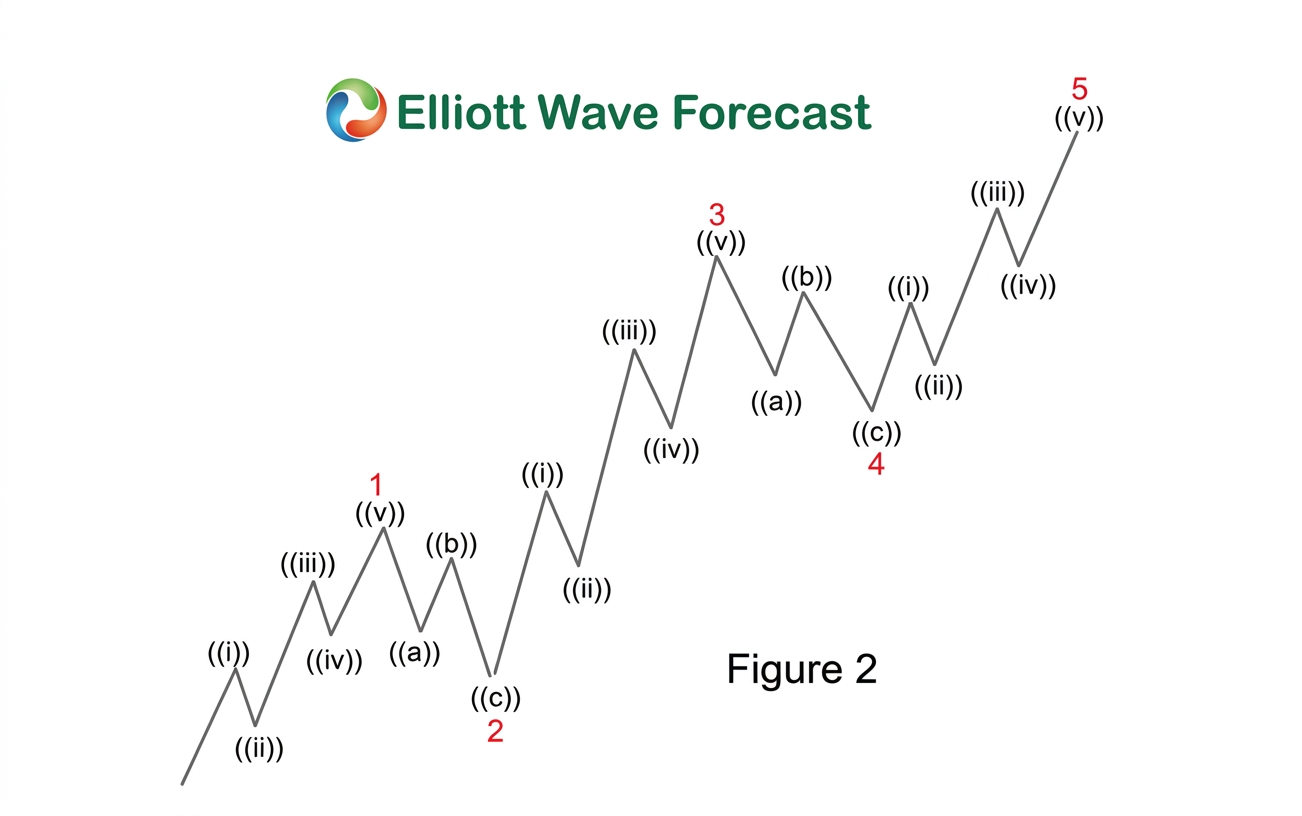
Elliott Wave Structure Explained
The Elliott Wave model consists of 5 impulse waves:
- Wave 1 – Initial move in trend direction
- Wave 2 – Correction (pullback)
- Wave 3 – Strongest and most profitable move
- Wave 4 – Slower correction
- Wave 5 – Final push before trend reversal
Trading Strategies Using Trendlines
To trade effectively with Elliott Waves:
- Look for Wave 2 retracement levels (38.2%, 50%, 61.8%)
- Target Wave 3 expansion (at least 61.8%)
- Use trendlines as support/resistance zones
- Adjust stop-loss levels as price moves
- Aim for extended targets like 161.8% or 261.8%
Fibonacci retracements are used to identify potential support or resistance levels where a market might pause or reverse during a corrective phase.
Wave 3 and Wave 5 are typically the most profitable trading opportunities.
Key Takeaways
- Channeling helps predict future wave positions
- Trendlines confirm market direction
- Elliott Wave structure improves trade timing
- Fibonacci ratios enhance price target accuracy
- Combining these tools increases trading confidence and success
Conclusion
Mastering Elliott Wave channeling and trendlines can significantly improve your technical analysis. These tools not only help you understand market structure but also provide actionable insights for entering and exiting trades with confidence.
By consistently applying these techniques, traders can gain a competitive edge and make more informed decisions in any market condition.
FAQ
What is channeling in Elliott Wave theory?
Channeling is a method of drawing parallel lines to predict future price movements within a wave structure.
Which Elliott Wave is best for trading?
Wave 3 is typically the strongest and most profitable wave, followed by Wave 5.
Are trendlines reliable in trading?
Yes, trendlines are widely used to identify trends and key support/resistance levels.